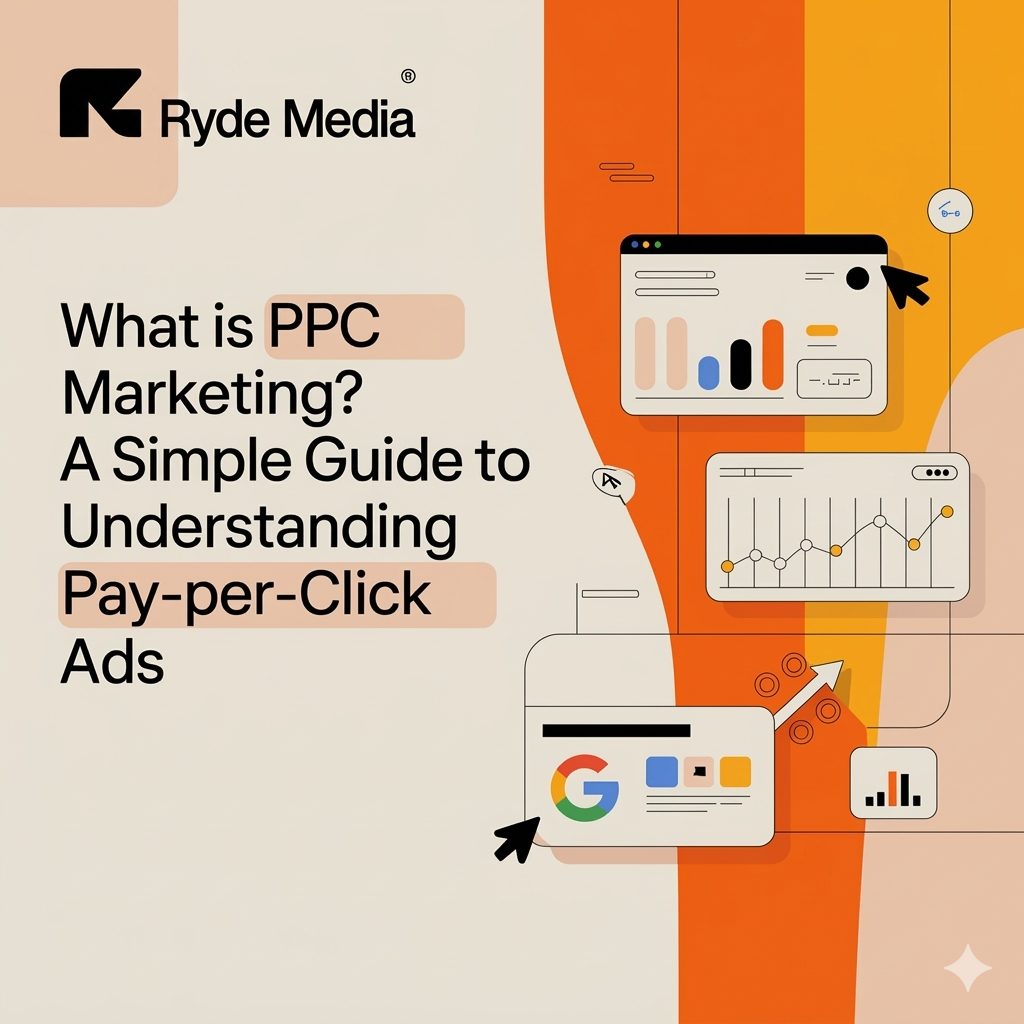
What is PPC Marketing? A Simple Guide to Understanding Pay-Per-Click Ads
You’ve heard the term thrown around in marketing conversations—PPC, pay-per-click, Google Ads. Everyone seems to assume you know what it means, but honestly? You’re not entirely sure. Is it just another form of advertising? How does it actually work? And more importantly, should your business be using it?
You’re not alone. Many business owners feel overwhelmed by digital marketing terminology, especially when it comes to paid advertising. The good news? PPC marketing is actually simpler than it sounds, and understanding it could unlock a powerful customer acquisition channel for your business.
According to WordStream data, businesses make an average of $2 for every $1 spent on Google Ads when campaigns are properly managed. Moreover, Google Economic Impact reports that businesses make an average of $8 in profit for every $1 spent on Google Ads. These numbers explain why PPC has become essential for businesses of all sizes.
At Ryde Media Inc, we help businesses navigate the world of PPC marketing and create campaigns that actually generate revenue rather than just burning through budgets. Let’s break down everything you need to know about pay-per-click advertising in simple, practical terms.
Understanding PPC Marketing: The Basics
What is PPC in marketing? PPC stands for Pay-Per-Click, a digital advertising model where you pay only when someone clicks on your ad. Unlike traditional advertising, where you pay for exposure regardless of results, PPC charges you exclusively for actual engagement.
Think of it this way—you’re not paying for your ad to be seen; you’re paying for people to visit your website or landing page. This performance-based model makes PPC one of the most accountable forms of advertising available.
Meaning of PPC in digital marketing goes beyond just the payment structure. It represents a fundamental shift in how businesses approach advertising—focusing on measurable results, precise targeting, and data-driven optimization rather than broad exposure and guesswork.
How PPC Marketing Works in Practice
What is PPC marketing and how it works can be explained through a simple process. First, you create ads targeting specific keywords or audiences. Then, these ads enter an auction system where you compete with other advertisers. Next, the platform displays ads based on bid amount and ad quality. Finally, you pay only when someone clicks your ad and visits your destination page.
How to pay-per-click involves setting a maximum cost-per-click (CPC) bid—the highest amount you’re willing to pay for a single click. If your maximum bid is ₦200 and someone clicks your ad, you might pay anywhere from ₦50 to ₦200 depending on competition. Importantly, you only pay when clicks occur, never for impressions alone.
Which Platform Is Most Commonly Used for PPC?
Which platform is most commonly used for PPC? Google Ads dominates the PPC landscape, capturing the majority of search advertising spending globally. Is Google Ads a PPC? Yes—Google Ads is the most prominent PPC platform, allowing businesses to display ads on Google search results, YouTube, and millions of partner websites.
However, Google isn’t your only option. Other major PPC platforms include:
Microsoft Advertising (formerly Bing Ads) reaches users on Bing, Yahoo, and partner sites. While smaller than Google, it often offers lower costs per click and reaches a different demographic—typically older and more affluent users.
Facebook Ads and Instagram Ads fall under Meta’s advertising platform. These excel at visual advertising and precise demographic targeting based on interests, behaviors, and connections.
LinkedIn Ads specializes in B2B marketing, allowing targeting by job title, company size, industry, and professional characteristics. Consequently, it’s ideal for reaching business decision-makers.
Twitter Ads, TikTok Ads, and Pinterest Ads each serve specific audiences and content types. TikTok captures younger demographics through short-form video, while Pinterest excels for visual discovery and shopping inspiration.
According to Statista research, Google Ads accounts for approximately 28% of global digital advertising revenue, making it the clear leader in PPC advertising.
What Are the Two Types of PPC?
What are the two types of PPC? While numerous PPC variations exist, the two primary categories are search advertising and display advertising.
Search Advertising
Search ads appear when people actively search for specific keywords on search engines like Google. These text-based ads appear above or below organic search results, marked with an “Ad” or “Sponsored” label. Search advertising captures high-intent users actively looking for solutions, making it excellent for direct response and conversions.
Display Advertising
Display ads are visual banner advertisements appearing on websites, apps, and videos across ad networks. Unlike search ads that respond to active searches, display ads reach people as they browse content. These work well for brand awareness, remarketing to previous visitors, and visual storytelling.
Additionally, several hybrid and specialized PPC formats exist including shopping ads (product listings with images and prices), video ads (YouTube and other platforms), and app install ads (driving mobile app downloads).
PPC Marketing Examples: Seeing It in Action
Let’s explore practical PPC marketing examples to understand how different businesses use this strategy.
E-commerce Example: An online electronics store in Lagos runs Google Shopping ads for “Samsung Galaxy S24.” When someone searches that term, their product listing appears with image, price, and store name. The searcher clicks, visits the product page, and purchases. The store pays ₦150 for the click that generated a ₦200,000 sale.
Local Service Example: A plumbing company runs Google Search ads for “emergency plumber in Lekki.” Their ad appears when someone has a burst pipe and searches desperately for help. The searcher calls directly from the ad. The plumber pays ₦300 for the click that resulted in a ₦50,000 repair job.
B2B Software Example: A productivity software company runs LinkedIn ads targeting “Marketing Managers” at companies with 50+ employees. The ad offers a free trial. Interested prospects click, sign up, and eventually convert to paying customers worth ₦500,000 annually.
These examples demonstrate what is an example of PPC success—targeted advertising reaching the right people at the right moment, generating measurable ROI.
What Is Another Name for PPC?
What is another name for PPC? Several terms refer to the same concept. “Paid search” describes PPC on search engines specifically. “Cost-per-click (CPC) advertising” focuses on the payment metric. “Search engine marketing (SEM)” often refers to paid search advertising, though technically SEM includes both paid and organic search efforts.
Additionally, platform-specific names exist—”Google Ads” (formerly AdWords), “Facebook Ads,” “LinkedIn Ads”—all operate on PPC principles even when not explicitly labeled as such.
What Is PPC and SEM Marketing Together?
What is PPC and SEM marketing in relation to each other? SEM (Search Engine Marketing) is the broader umbrella encompassing all marketing activities related to search engines. PPC represents the paid component of SEM, while SEO (Search Engine Optimization) represents the organic component.
Think of SEM as the full strategy for search visibility. PPC provides immediate visibility through paid ads, while SEO builds long-term organic rankings. Most comprehensive digital marketing strategies incorporate both, using PPC for quick results and competitive terms while building SEO for sustainable, lower-cost traffic over time.
What Is PPC Marketing Strategy?
What is PPC marketing strategy? It’s the comprehensive plan guiding your pay-per-click advertising efforts. A strong strategy addresses several critical elements.
Clear Goal Definition
Every PPC campaign needs specific objectives. Are you driving sales, generating leads, building awareness, or promoting an event? Different goals require different campaign structures, ad copy, and measurement approaches.
Audience Targeting
Successful PPC identifies and reaches the right audience. This involves keyword research for search ads, demographic and interest targeting for display and social ads, and remarketing to previous website visitors.
Budget Allocation
What are PPC strategies for managing budgets? Start with testing budgets to gather data, then scale spending on campaigns proving profitable. Set daily and monthly limits to control costs, and allocate more budget to high-performing campaigns while pausing underperformers.
Ad Creation and Testing
Compelling ad copy and visuals determine click-through rates. Test multiple variations to identify what resonates with your audience. Continuously refine based on performance data.
Landing Page Optimization
Clicks mean nothing without conversions. Ensure landing pages match ad messaging, load quickly, and make conversion easy. According to Unbounce research, the average landing page conversion rate is 2.35%, but the top 10% achieve rates of 11.45% or higher through optimization.
How to Do PPC Marketing: A Beginner’s Roadmap
Ready to start? Here’s how to do PPC marketing step by step, even if you’re completely new.
Step 1: Choose Your Platform
Based on your business and audience, select the most appropriate platform. B2C products often start with Google Ads or Facebook. B2B services might prioritize LinkedIn. Local businesses typically begin with Google Ads for local search visibility.
Step 2: Set Up Your Account
Create your advertising account on your chosen platform. This involves business verification, payment method setup, and familiarizing yourself with the dashboard interface.
Step 3: Define Your Campaign Goals
How to create a PPC plan starts with clear objectives. Determine what success looks like—sales, leads, phone calls, app installs, or website traffic. Your goal shapes every subsequent decision.
Step 4: Conduct Keyword Research
For search advertising, identify keywords your potential customers use. Tools like Google Keyword Planner show search volumes and competition levels. Focus on keywords with clear commercial intent rather than broad informational terms.
Step 5: Create Compelling Ads
Write ad copy that speaks directly to your audience’s needs and desires. Highlight benefits, include clear calls-to-action, and ensure your ads align with landing page content. For display and social ads, create eye-catching visuals that stop the scroll.
Step 6: Set Your Budget and Bids
Start conservatively with testing budgets. How to do PPC in digital marketing effectively requires data before scaling. Set maximum daily budgets you’re comfortable spending, and establish cost-per-click bids based on keyword value.
Step 7: Launch and Monitor
Launch your campaigns and monitor performance closely in the first few days. Watch for technical issues, unexpected costs, or opportunities to optimize quickly.
Step 8: Analyze and Optimize
Review performance metrics—click-through rates, conversion rates, cost per conversion, and return on ad spend. Pause underperforming ads, increase budgets for winners, and continuously test improvements.
According to PPC Hero research, successful PPC campaigns require ongoing optimization rather than “set and forget” approaches. Plan to spend time weekly reviewing and refining your campaigns.
Common PPC Mistakes Beginners Make
Understanding what not to do helps you avoid costly errors. First, targeting overly broad keywords wastes budget on irrelevant clicks. Someone searching “computer” might want repairs, sales, programming tutorials, or computer science degrees. Specify your targeting.
Second, neglecting negative keywords allows your ads to show for irrelevant searches. If you sell premium products, add “cheap” and “free” as negative keywords to avoid bargain hunters.
Third, sending all traffic to your homepage rather than specific, relevant landing pages reduces conversions dramatically. Match ad messaging to dedicated landing pages for each offer or product.
Fourth, ignoring mobile optimization loses the majority of potential customers. Most PPC clicks now come from mobile devices. Ensure your ads and landing pages work flawlessly on smartphones.
Finally, expecting immediate profitability without testing and optimization leads to disappointment. PPC requires refinement—initial campaigns rarely perform optimally without adjustment.
Taking Your First Steps with PPC Marketing
You now understand what is PPC marketing, how it works, which platforms to use, and how to get started. The knowledge exists—the question is whether you’ll take action.
PPC offers something few marketing channels provide—immediate results and complete measurability. You can launch a campaign today and have customers tomorrow. Furthermore, you’ll know exactly what you spent and what you earned, allowing data-driven decisions rather than guesswork.
Start small. Choose one platform, create one campaign, set a modest budget, and learn. The businesses dominating PPC didn’t start with perfect campaigns—they started with testing, learned from data, and scaled what worked.
Your competitors are advertising right now. Customers are searching for solutions you provide. The only question is whether those customers will find your competitors’ ads or yours.
What will you advertise first?