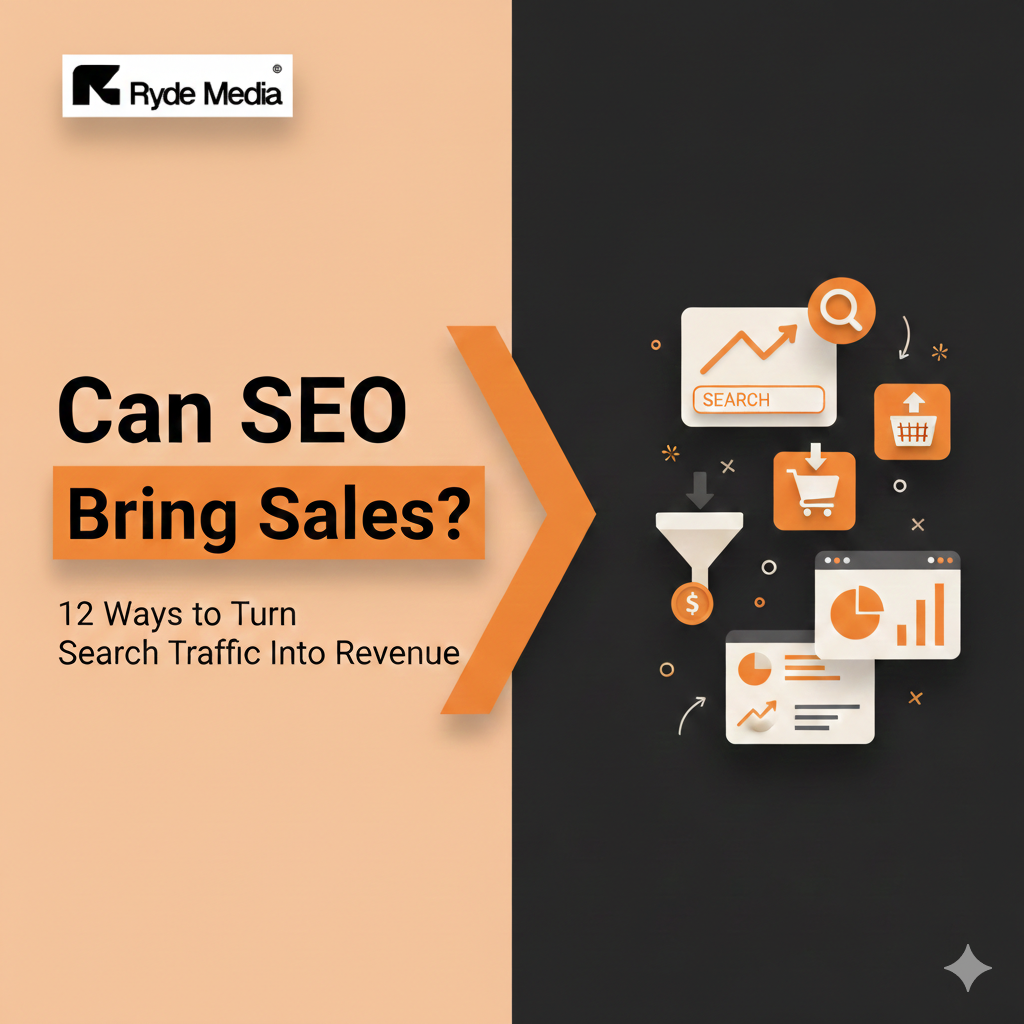
Can SEO Bring Sales? 12 Ways to Turn Search Traffic Into Revenue
SEO (Search Engine Optimization) is the practice of optimizing your website and content to rank higher in search engine results for keywords your target customers use. When someone searches Google for “digital marketing agency Lagos” or “best accounting software Nigeria,” SEO determines whether your business appears on page one or page ten.
In digital marketing, SEO forms the foundation of sustainable online visibility. Unlike paid advertising—where traffic stops the moment you stop paying—SEO builds long-term organic traffic that continues generating leads and sales over time.
Search engines like Google rely on complex algorithms to evaluate websites and decide which ones best answer specific search queries. These algorithms consider hundreds of factors, including content quality, technical performance, user experience, backlinks, and relevance to search intent.
To make this practical, imagine you run a catering business in Abuja. When someone searches “corporate catering services Abuja,” SEO determines whether they find your website. If your site is optimized with relevant content, proper structure, local business information, and credibility signals like reviews and backlinks, Google recognizes you as a trustworthy option. That visibility leads to inquiries, bookings, and revenue.

Can SEO Bring Sales? The Direct Answer
Yes—SEO brings sales, but only when executed strategically. From a business perspective, SEO isn’t about traffic alone; it’s about attracting qualified prospects with commercial intent who are actively looking for solutions you provide.
To understand this better, consider the difference between someone searching “what is digital marketing” and someone searching “hire digital marketing agency Lagos.” The first person is learning. The second person is ready to buy. Strategic SEO targets both—using informational content to build awareness and authority, and transactional content to capture ready-to-buy prospects.
Research consistently shows that organic search drives some of the highest conversion rates of any digital marketing channel. This happens because SEO doesn’t interrupt people with ads. Instead, it shows up precisely when users are searching for what you offer. The intent already exists—SEO simply connects the need to your solution.
Ways to increase sales using SEO include ranking for high-intent keywords, optimizing for local search, creating comparison and review content, and building topical authority that positions your business as the obvious choice.
The 4 Pillars of SEO: Foundation for Success
Before diving into specific strategies, it’s important to understand the four pillars of SEO that form the foundation of any successful approach.
Technical SEO ensures search engines can properly crawl, index, and understand your website. This includes site speed, mobile optimization, secure connections (HTTPS), clean code, and proper site structure. Without a solid technical foundation, even great content won’t rank.
On-page SEO focuses on optimizing individual pages for target keywords through content structure, headings, meta descriptions, internal linking, and URLs. These elements tell search engines what each page is about and why it deserves visibility.
Off-page SEO builds authority through backlinks, brand mentions, and external signals of trust. Google treats quality backlinks as votes of confidence in your content.
Content delivers value to users while targeting keywords they actually search. Strong content answers questions, solves problems, earns links, and converts visitors into customers.
All four pillars must work together. Great content without technical SEO won’t rank. Perfect technical SEO without quality content won’t convert. Authority without relevance won’t drive qualified traffic.
12 Ways to Turn SEO Into Sales
1. Target Commercial Intent Keywords
Not all keywords drive revenue. Searches like “what is CRM software” attract researchers, while “best CRM software for small business Nigeria” attracts buyers.
To improve results, focus your SEO strategy on keywords that signal purchasing intent. Use keyword research tools to identify what prospects search when they’re ready to buy—not just when they’re learning.
2. Optimize for Local SEO
For location-based businesses, local SEO is one of the fastest ways to drive sales. Searches like “plumber in Lekki” or “restaurant near me” usually indicate immediate intent.
To capitalize on this, optimize your Google Business Profile, encourage reviews, add location-specific content to your site, and build consistent citations across directories. These steps position your business for high-conversion local searches.
3. Create Comparison and Review Content
Late-stage buyers search for comparisons and reviews before making decisions. Content like “Product A vs Product B” captures users who are close to purchasing.
Publishing honest, detailed comparisons helps prospects decide—and often converts extremely well when done right.
4. Build Topical Authority
Rather than publishing random content, focus on becoming an authority in your niche. Google rewards websites that cover topics comprehensively.
For example, if you offer digital marketing services, build in-depth content around SEO, PPC, content marketing, and social media. This authority boosts rankings across related keywords.
5. Optimize Product and Service Pages
Service pages should rank and convert. Combine keyword optimization with compelling copy, trust signals, testimonials, and clear calls-to-action.
Make it easy for visitors to take the next step—request a quote, book a call, or make a purchase.
6. Answer Customer Questions
Prospects search questions before buying. Creating content that answers them clearly and thoroughly builds trust early.
This approach positions your brand as helpful long before the sales conversation begins.
7. Implement Strategic Internal Linking
Internal links help search engines understand your site—and guide users from educational content to conversion pages.
By linking blog posts to relevant services and creating logical content paths, you reduce friction in the buyer journey.
8. Optimize for Featured Snippets
Featured snippets place your content at the very top of search results. Structuring content to answer questions clearly increases your chances of winning these positions.
Winning featured snippets improves visibility and boosts click-through rates significantly.
9. Build Quality Backlinks
Authoritative backlinks signal trust to Google and send referral traffic from relevant sources.
Focus on quality over quantity through guest posting, PR mentions, partnerships, and link-worthy content.
10. Create Long-Form, Comprehensive Content
In-depth content ranks better, earns more links, and builds authority. The goal is to become the most useful resource on the topic—not just another article.
11. Optimize for Mobile and Page Speed
Slow, mobile-unfriendly websites kill conversions. Improving speed, compressing images, enabling caching, and testing mobile usability regularly makes a measurable difference.
Better performance improves rankings and sales.
12. Track and Optimize for Conversions
SEO success isn’t traffic—it’s revenue. Track form submissions, calls, bookings, and purchases to understand what’s working.
Double down on keywords and pages that generate real business results.
How to Apply SEO to Your Website: Getting Started
Feeling overwhelmed by SEO? You’re not alone. The key is to approach it systematically rather than randomly.
Here’s how to get started the right way:
1. Start with Keyword Research
Identify the exact terms your ideal customers are searching for when looking for your products or services. Focus on keywords with clear intent, not just high volume.
Useful tools include Google Keyword Planner, SEMrush, and Ahrefs. Look for keywords that balance search volume, relevance, and commercial intent.
2. Audit Your Current Website
Before creating new content, understand what’s already working—and what isn’t.
Assess technical SEO issues, content gaps, page speed, mobile usability, and indexing errors using tools like Google Search Console, PageSpeed Insights, and Screaming Frog.
3. Optimize Existing Pages First
Quick wins often come from improving what you already have.
Update title tags, meta descriptions, headings, internal links, and content depth. Each page should target a specific keyword and provide clear value.
4. Create a Strategic Content Plan
SEO works best when content supports the entire buyer journey.
Plan content for awareness, consideration, and decision stages, ensuring every piece aligns with your business goals—not just traffic.
5. Build Quality Backlinks
Backlinks signal trust and authority to search engines.
Focus on guest posting, creating linkable assets, and building genuine relationships within your industry. Quality always beats quantity.
6. Monitor, Measure, and Refine
SEO isn’t a one-time task. Track rankings, organic traffic, click-through rates, and conversions regularly.
Refine what isn’t working and double down on what is.
What Is a 3-Month SEO Strategy?
A 3-month SEO strategy focuses on momentum-building and quick wins.
During this period, prioritize optimizing high-traffic pages, fixing technical issues, publishing low-competition content with strong intent, and setting up foundational local SEO.
By month three, early ranking improvements and traffic growth should be visible, with results compounding over time.
Transform Your SEO Into a Revenue Engine
So, can SEO bring sales? Absolutely—when done strategically. Businesses that win with SEO focus on intent, conversions, and continuous optimization—not vanity metrics.
SEO isn’t a quick fix, but it’s one of the most sustainable, high-ROI marketing investments available today.
At Ryde Media Inc, we build SEO strategies designed to generate revenue, not just rankings. From keyword research to technical optimization and conversion-focused content, we help businesses turn search visibility into consistent sales.
Ready to turn your SEO into a revenue engine? Let’s build it together.